
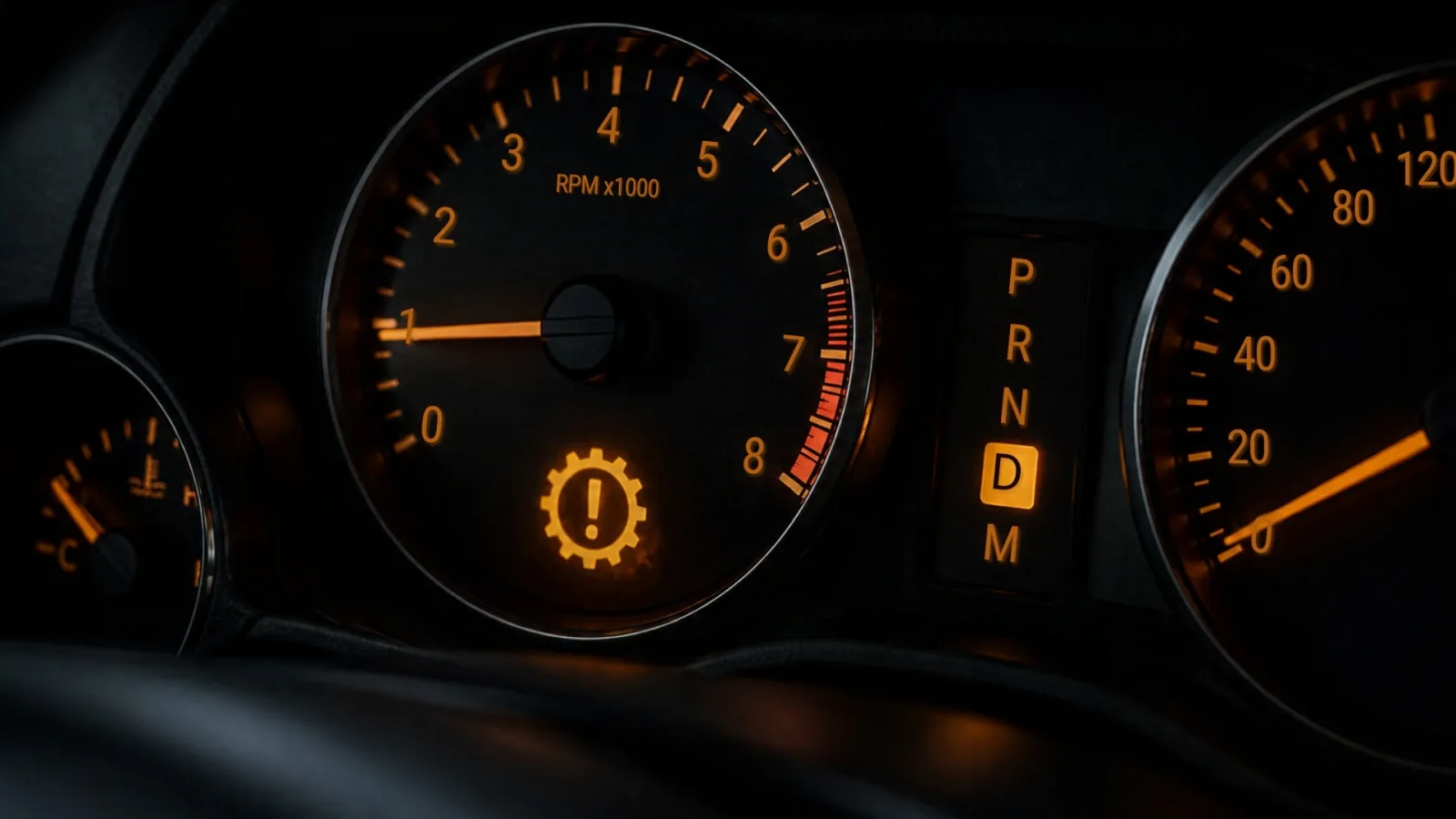
DSG, S tronic and similar dual-clutch gearboxes work differently from conventional automatics. They contain two separate clutches, and gear changes happen as the clutches engage in a sequence managed by the mechatronic unit. This design gives quick, efficient shifts, but the condition of the clutches, the mechatronic unit and the oil directly affects how the car feels to drive.
The most common symptoms
- Shuddering when pulling away: a slight judder at low speed and in stop-start traffic can show that the clutch surfaces are wearing.
- A thump when changing gear: a hard knock on upshifts or downshifts can come from the mechatronic unit or the oil.
- A delay when engaging a gear: the car is slow to move after selecting D or R.
- Revs rising without acceleration: may indicate clutch slip.
- Limp mode: the gearbox limits the gears to protect itself, with a warning and a flashing gear indicator.
Why a symptom alone is not enough
Most of these symptoms look alike and the same symptom can have different causes. Shuddering can come from clutch wear, but also from the oil level or the adaptation values. Replacing parts without reading the fault codes and checking the oil and operating values creates unnecessary cost.
When to book a visit
If the symptom repeats, if the car has entered limp mode or if a warning light is on, we recommend bringing it in rather than pushing on. Faults caught early usually stay small in scope. Noting your car's make and model and when the symptom appears (cold or warm, at what speed) speeds up diagnosis.
Automatic Transmission Repair
Harsh shifts, slipping, delayed gear changes or a gearbox warning light? We find the fault by measurement and repair DSG, S tronic, Tiptronic and PDK transmissions in our Bornova workshop.
Learn More